Monday, October 26, 2009

Westminster Abbey


Westminster Abbey dates back to around 960 AD. However, the church that stands there now is from the 13th century. Westminster is the traditional coronation place of coronation of British monarchs. 38 monarchs have been crowned in the Abbey. It is also the burial and memorial place of monarchs, poets, politicians, etc.


King Henry III built the Abbey as we know it today. He spend 17 million pounds on the construction of the Abbey.


There are multiple monarchs buried in the Abbey. Henry VII and Elizabeth of York are buried in chapel of Henry VII. Their tomb cost 1/2 million pounds. Elizabeth I and Mary I, also known as Bloody Mary, were also buried in the Abbey. Mary is buried below Elizabeth. Their epitaph says that they share a tomb as they shared a throne, and that they are one in their hope of resurrection.


I also got to see the coronation chair that has been used at every coronation since it was made by Edward I around 1300. The chair was designed to hold the Stone of Scone. This was a stone taken from the Scots. It has since been returned to Scotland but it is returned to England for every coronation. Unfortunately we couldn't take pictures in the Abbey so I don't have any pictures from the inside.

Some of the famous people buried or commemorated at Westminster Abbey include:
  • Geoffrey Chaucer
  • Jane Austen
  • TS Eliot
  • Charles Dickens
  • Issac Newton
  • Charles Darwin
  • William Wilberforce
I also saw the Grave of the Unknown Solider. The grave stone read: "They buried him among kings because he had done good toward God and towards his house."

I really enjoyed going to Westminster Abbey and seeing the graves and memorials of so many influential people.

Preston

Preston

September 24, 2009

Preston was one of the first places in England where the gospel was preached. It was chosen because Joseph Fielding had family there. When we arrived in Preston we went to the center of the town and we saw the obelisk where the missionaries, such as Orson Hyde, preached. Preston also was the first area Gordon B. Hinckley served in during his mission.

When the missionaries were serving in Preston in the late 1830s it was during the Industrial Revolution. This led to urbanization and when the missionaries arrived they said that they had never seen such a difference between the rich and the poor. This was part of the reason there was a lot of strife and strike during the period. Karl Marx said that Preston would be England’s St. Petersburg, a place of revolution.


We were also able to see the house on St. Wilfred Street where the missionaries stayed. This was also the place where the missionaries saw the vision of evil spirits. When Joseph Smith heard about this incident he was glad because he said it meant something good was going to happen.


The Ribble River runs through Preston. This was where the first converts in England were baptized. The first saint to be baptized was George Watt, who won the footrace to get to the water first. It is estimated that between 7,000 and 9,000 people came to witness these baptisms. They referred to them as “dippers” because the baptized by immersion. Watt knew shorthand and when he emigrated to the United States he recorded for Brigham Young and eventually put together the Journal of Discourses.


We also went to a couple little towns outside of Preston, including Ribchester and Downham. Heber C. Kimball said that an ancient apostle stood on one of the hilltops in Downham.


We ended our time in Preston at the Preston temple, which is actually located in Chorley, outside of Preston. We had the opportunity to walk around the grounds. I’m sure the saints who lived and were converted in Preston during the 19th century would be proud to see the temple that now stands there.


Southall


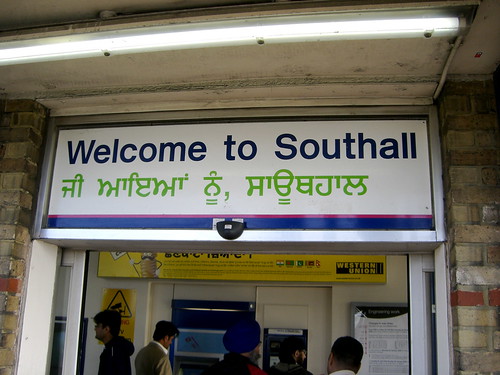
Southall London

September 11, 2009


Sikh Gurdwara

Our first stop in Southall was the Sikh temple, known as a Gurdwara. We had the opportunity to go into the prayer hall and observe the worshippers there. The one thing I noticed was the obvious respect and reverence of the people worshipping there. I even saw a little boy, who was probably no more than three, touch his head to the ground as a sign of respect like his parents. Another example of the Sikh’s reverence is how they treat their sacred book. They wave a chaur sahib over the book to show respect and keep the air around it clean. I noticed that both men and women do this. This connects to what we discussed in class about how Sikhs believe that men and women are equal. The man who spoke to us about Sikhism explained that they believe men and women are equal because our spirits are genderless. I found that really interesting especially when you compare it to our LDS belief that gender is crucial to our role.

I really enjoyed learning more about Sikhism. The word Sikh means student, learner, or disciple. Members of Sikhism view it as a way of life, similar to how we believe the gospel is a way of life. They also believe that we must change ourselves to fit God, not the other way around. Sikh’s are also very accepting and open of other religions. They believe that God is everywhere and resides in everyone. Regardless of your faith, they believe you should be the best you can be in your faith and have the closest relationship with God possible.

Following the Sikh temple we went to two Hindu temples. Hindus believe in many gods and their temples are filled with statues of these gods. The Hindu temples were quite different from the Sikh temple. The Hindu temples were much more elaborately decorated, with lights, bright colors, icons, and rich fabrics. This is also very different from our places of worship. However, as I sat and watched the people I realized that although they worship in very different ways than I do, they are still showing respect and reverence in the best way they know how. The people I saw took their time in front of each of the gods they wished to worship and showed their reverence. Many people brought offerings of money or of food to place in front of the icons of the gods.

Even though these two religions don’t hold all of the same beliefs as our religion and they worship in a different way, I can still feel their reverence and how much they love their faith.


Front of Sikh Gurdwara

Sunday, October 25, 2009

The Evening Star


The Evening Star

The Evening Star is a painting done by J.M.W Turner, a Romantic painter who lived from 1775 to 1851. This painting depicts a boy walking along the seashore, carrying a net, and accompanied by a small dog. As the name hints, in the painting there is an evening star in the sky which is reflected brightly in the ocean water. According to the information at the museum, this painting is unfinished and is regarded as more of a study of light and atmosphere.
The techniques Turner used in executing this painting, such as textures and brushstrokes, and color choice, have a vast affect on the emotional impact of the piece. This painting is particularly textured with varying paint thickness throughout the painting. For example, the star both in the sky and the reflection in the sea is done with thickly applied white paint. This draws the viewer’s attention. While we can see the star in the sky, the reflection in the water is much brighter and more discernable.
Personally this led me to think about reflections in aspects of my life. I thought of my actions and what they reflect about me. The reflection of what my actions may mean or how others may take them is often more poignant than the action itself. I may be totally off base in my interpretation, but I think that the way the elements flow and blend in this painting allow the viewer’s mind and thoughts to easily and naturally flow, assisting them in reaching their own personal conclusion or interpretation.
Turner’s painting techniques seem to be less focused on details and more focused on the full effect of the work. The Evening Star consists of many elements that seem to flow together. This particular style differed greatly from previous European landscapes. These landscapes contain much more detail, while Turner’s painting leaves more room for personal interpretation of the landscape.

The color palette used by Turner in this painting is a perfect example of the way he blends the
elements of his paintings. The soft, warm colors in The Evening Star seem to blend and flow into one another. This gives the effect of not knowing where one element ends and another begins. These colors and the way they are used evoke calm, peaceful, and pensive emotions in the viewer.
The size and scale of the image also contributes to its emotional impact. Personally, I felt that the image was fairly intimate. It is not so big that it makes the viewer feel insignificant and small in
comparison. The scale of the boy and the dog also make the viewer feel that they aren’t too far removed from the scene and that they could be walking further down the beach, experiencing the scene for themselves. Overall, Turner’s technique of blending the colors and elements in his paintings provides freedom for the viewer to make their own interpretations.


Portrait of JMW Turner